
Tie Rod End vs Inner Rack End: What’s the Difference?
Tie Rod End vs Inner Rack End: What’s the Difference? – Full Guide for Japanese & Korean Cars in Southeast Asia, Middle East & Latin America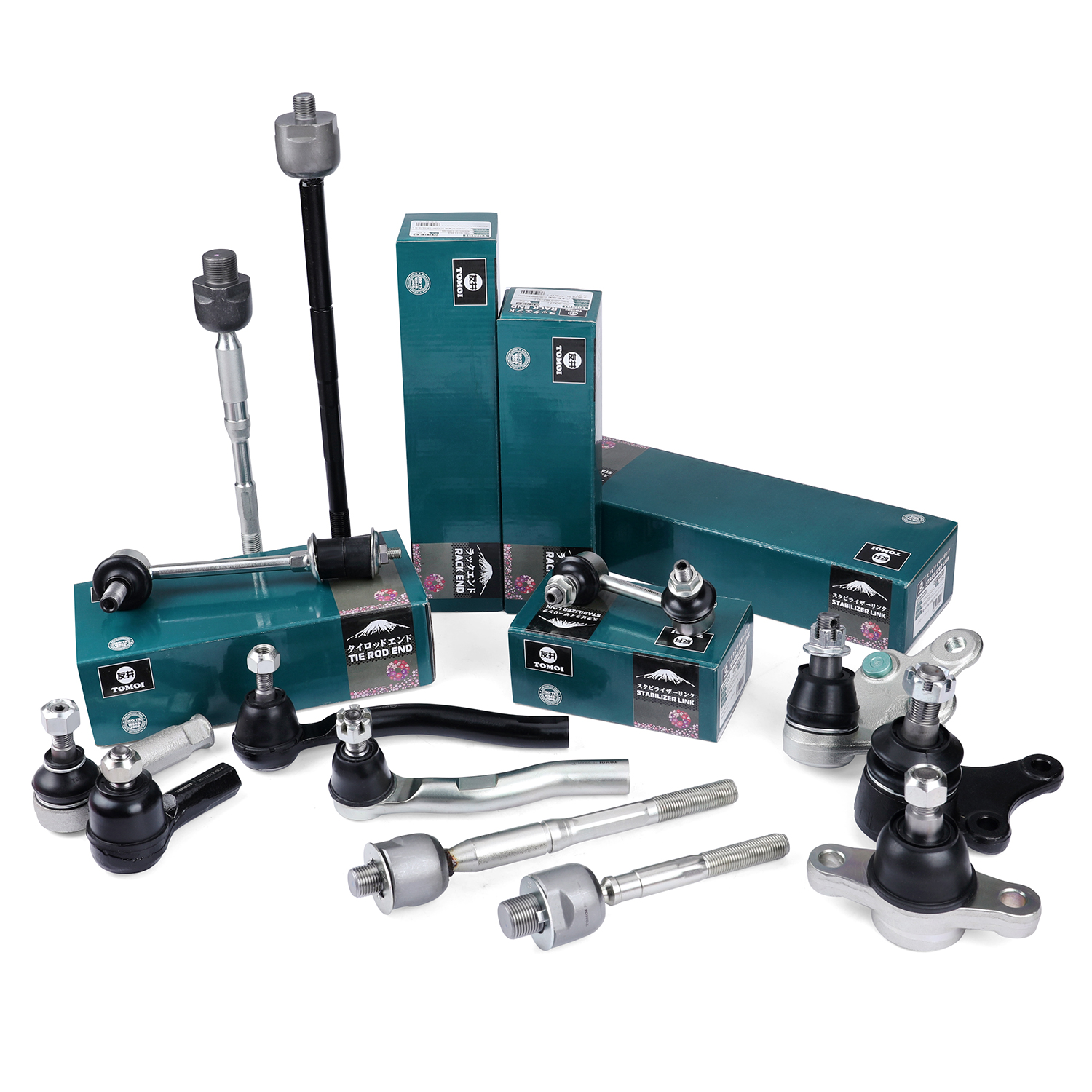
For car owners, drivers, mechanics, and auto parts buyers operating in Southeast Asia, the Middle East, and Latin America, understanding steering system components is essential for safety, vehicle performance, and cost-effective maintenance. Among the most commonly replaced and frequently confused parts are the tie rod end and the inner rack end. Both play vital roles in connecting your steering system to your wheels, but they have distinct positions, functions, wear patterns, and replacement requirements. Mixing them up can lead to incorrect part purchases, poor wheel alignment, unsafe driving conditions, and unnecessary expenses.
In this detailed guide, we break down everything you need to know about tie rod ends and inner rack ends—including their structure, purpose, symptoms of wear, replacement logic, compatibility with Japanese and Korean vehicles, and performance under the tough road conditions common across emerging markets. By the end, you will be able to identify which part you need, explain the differences to customers or mechanics, and make smarter buying decisions for Toyota, Honda, Nissan, Hyundai, Kia, and other popular Asian car models.
What Is the Steering Rack System?
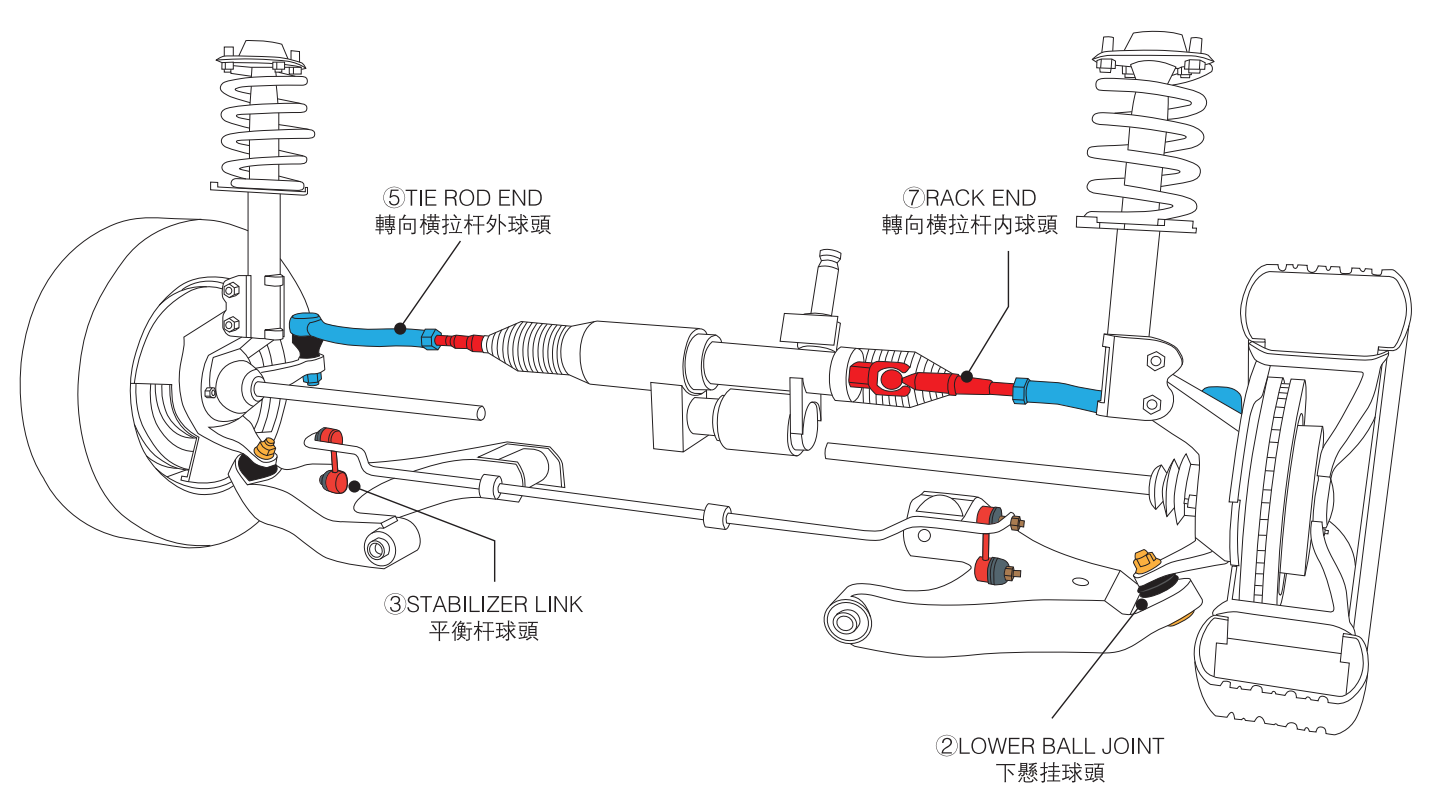
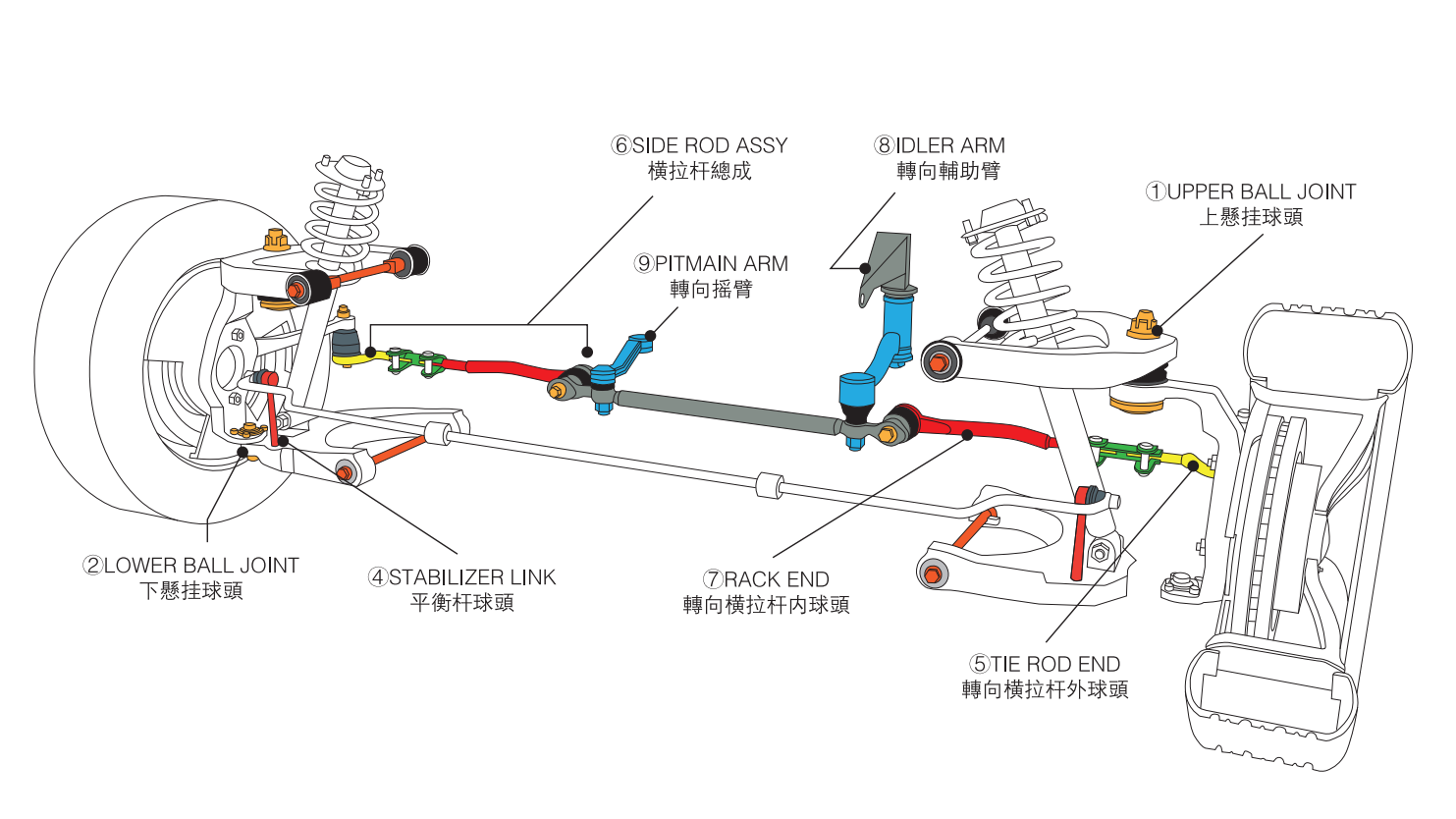
Before comparing tie rod ends and inner rack ends, it helps to understand the steering rack assembly as a whole. The steering rack is the central component of a rack-and-pinion steering system, which is standard on nearly all modern passenger cars, SUVs, pickups, and light commercial vehicles—especially Japanese and Korean models widely used in Asia, Africa, and the Americas.
When you turn the steering wheel, the motion transfers through the steering column to the pinion gear, which then pushes or pulls the steering rack horizontally. This movement must be reliably transmitted to the front wheels to ensure accurate, responsive, and safe direction control. The tie rod end and inner rack end work together as the critical link between the steering rack and the wheel hub knuckle. Without these two components working properly, steering precision is lost, and vehicle stability is severely compromised.
What Is a Tie Rod End? (Outer Tie Rod End)
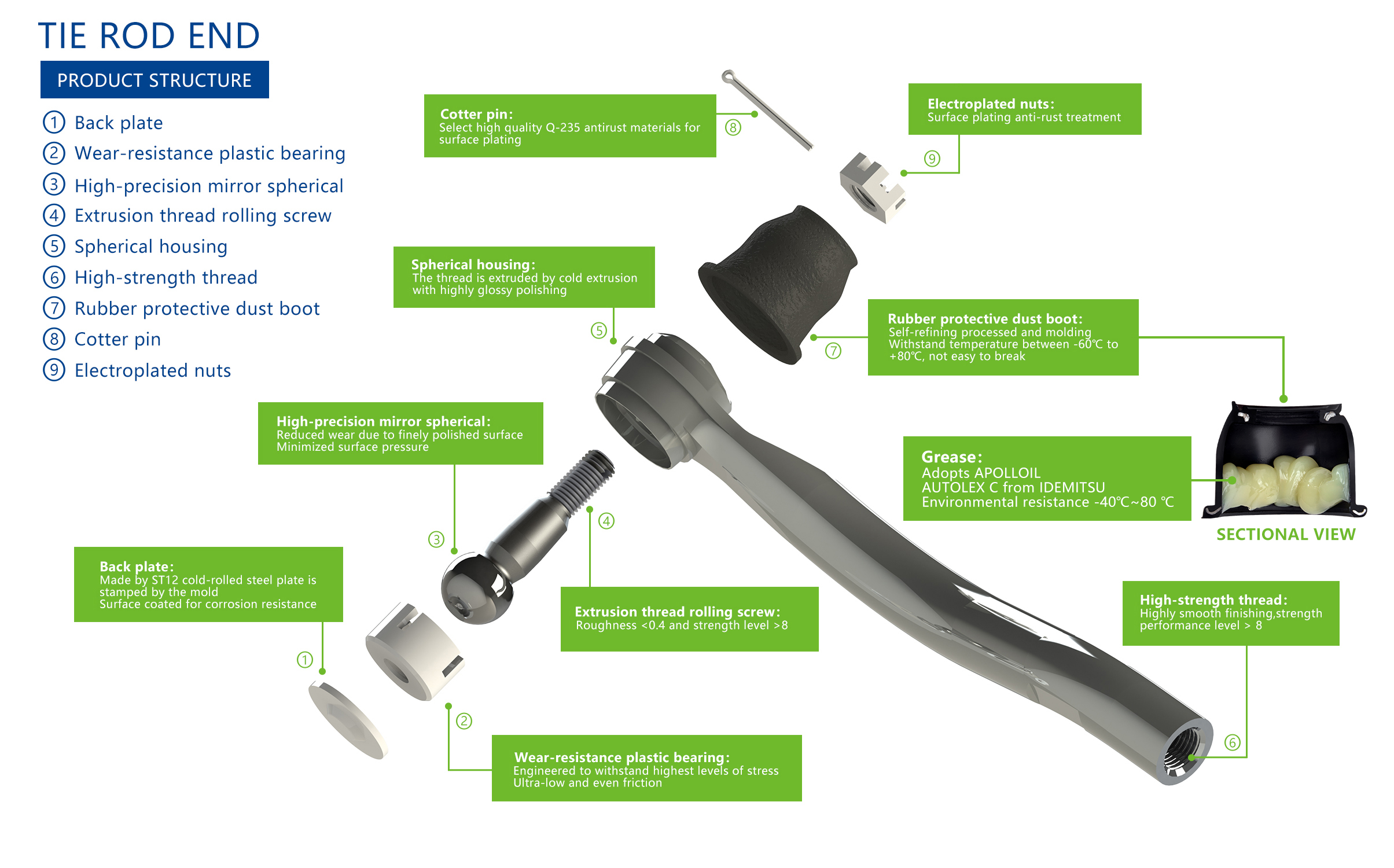
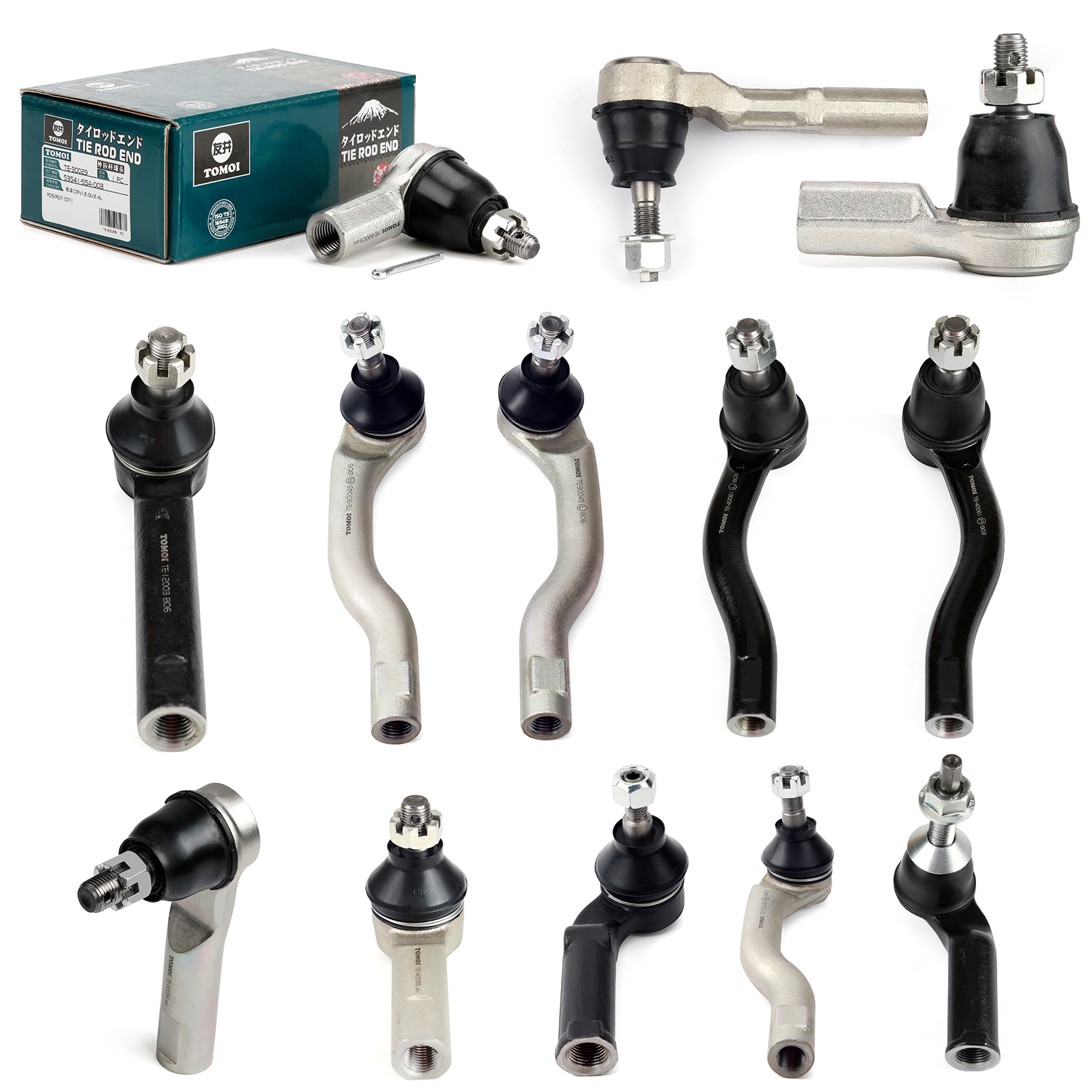
The tie rod end, often referred to as the outer tie rod end, is the visible, outer section of the tie rod assembly. It is mounted externally on the steering rack and connects directly to the steering knuckle of the front wheel.
Key Functions of a Tie Rod End
- Transmits steering movement from the inner rack end to the wheel hub.
- Maintains proper wheel alignment settings (toe, camber, caster).
- Allows slight articulation as the suspension moves up and down.
- Prevents excessive play or looseness in the front wheels.
- Ensures the vehicle travels straight without pulling left or right.
Location & Physical Characteristics
- Located outside the steering rack housing.
- Protected by a small rubber or plastic dust boot.
- Features a ball-and-socket joint for flexible movement.
- Threaded section allows adjustment for wheel alignment.
- Easily accessible during routine suspension inspections.
Because it is exposed to road debris, water, dust, heat, and vibration, the tie rod end tends to wear out faster than the inner rack end—especially on rough, unpaved, or poorly maintained roads typical in many parts of Southeast Asia, the Middle East, and Latin America.
What Is an Inner Rack End? (Inner Tie Rod End)
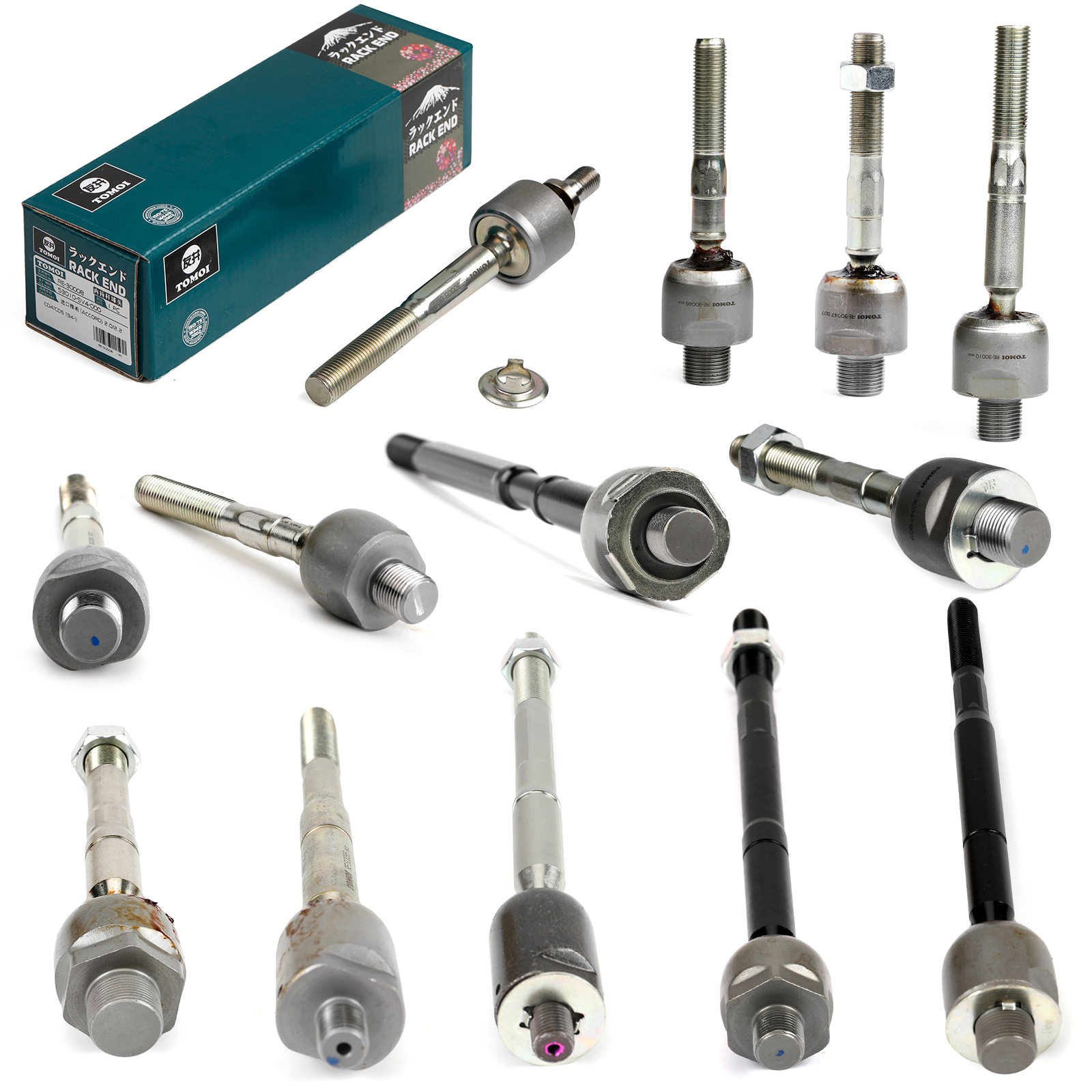
The inner rack end, also known as the inner tie rod end, is the internal part that connects the outer tie rod end to the actual steering rack shaft. It sits inside the steering rack housing or protective rubber boot.
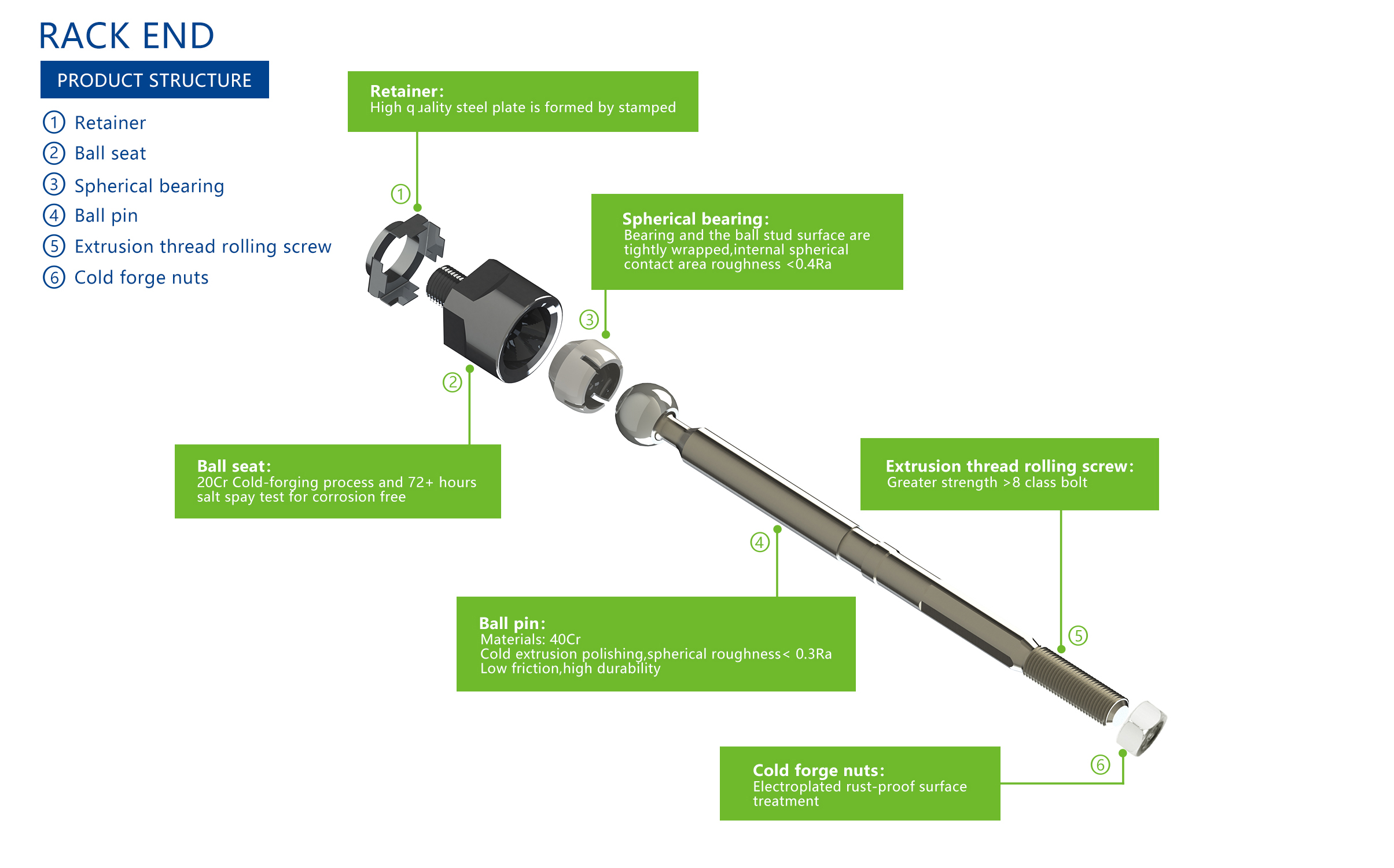
Key Functions of an Inner Rack End
- Connects the outer tie rod end to the steering rack.
- Transfers linear movement from the rack to the outer tie rod.
- Supports smooth and precise steering response.
- Reduces vibration and play in the steering system.
- Works under sealed, protected conditions.
Location & Physical Characteristics
- Located inside the steering rack housing or protective boot.
- Not visible without removing the outer tie rod and the protective cover.
- Features a threaded design and a ball joint or bearing mechanism.
- Protected from direct exposure to dirt, water, and impact.
- Generally more durable than the outer tie rod end under normal driving.
Since it operates in a sealed environment, the inner rack end usually lasts longer than the outer tie rod end. However, once the protective boot cracks, tears, or loses its seal, dirt, moisture, and sand can enter, causing accelerated wear and eventual failure.
Tie Rod End vs Inner Rack End: Full Comparison Table
To make identification easier, here is a complete side-by-side comparison:
Position
- Tie Rod End: External, outside the steering rack.
- Inner Rack End: Internal, inside the steering rack or boot.
Visibility
- Tie Rod End: Visible when inspecting the front suspension.
- Inner Rack End: Hidden, not visible during basic checks.
Connection
- Tie Rod End: Connects steering system to wheel knuckle.
- Inner Rack End: Connects tie rod end to steering rack shaft.
Wear Rate
- Tie Rod End: Wears faster due to exposure.
- Inner Rack End: Wears slower unless boot is damaged.
Replacement Frequency
- Tie Rod End: Replaced more often in high-wear markets.
- Inner Rack End: Replaced less often unless contamination occurs.
Alignment Requirement
- Tie Rod End: Always requires alignment after replacement.
- Inner Rack End: Always requires alignment after replacement.
Typical Failure Cause
- Tie Rod End: Dust, water, impact, rough roads, ball joint wear.
- Inner Rack End: Torn boot, contamination, lack of lubrication.
Compatibility
- Both parts are widely available for Japanese & Korean cars including Toyota, Honda, Nissan, Hyundai, Kia, Mitsubishi, Suzuki, and Isuzu.
Top 7 Symptoms of Worn Tie Rod Ends
Driving in harsh environments increases the rate of deterioration. Below are the most common signs of a failing tie rod end:
- Clunking or rattling noise when going over bumps or turning.
- Loose steering with noticeable play in the steering wheel.
- Vehicle pulls to the left or right on a straight road.
- Vibration in the steering wheel, especially at higher speeds.
- Uneven or rapid tire wear on the inner or outer edges.
- Poor handling and reduced stability during cornering.
- Squeaking sounds when turning the steering wheel at low speed.
Ignoring these signs can lead to loss of steering control, increased accident risk, and further damage to other suspension components.
Top 5 Symptoms of a Bad Inner Rack End
Inner rack end failure is less common but equally dangerous. Watch for these symptoms:
- Increased play in the steering wheel even after replacing outer tie rods.
- Inconsistent steering response that feels vague or delayed.
- Difficulty maintaining a straight line without constant correction.
- Oil or grease leakage from the steering rack boot area.
- Excessive vibration that cannot be fixed by wheel alignment.
If you replace the outer tie rod end but still experience steering issues, the inner rack end is likely the cause.
Do You Need to Replace Both at the Same Time?
A common question among mechanics and car owners is whether to replace the tie rod end and inner rack end as a set.
When to Replace Only the Tie Rod End
- Only outer wear symptoms are present.
- Inner rack end feels tight with no play.
- Steering rack boot is intact and not leaking.
- Vehicle is used mainly on paved roads.
When to Replace Both Parts Together
- Both parts show wear during inspection.
- The steering rack boot is damaged.
- High mileage (over 80,000–100,000 km).
- Vehicle operates on rough roads, dirt, or gravel.
- You are performing complete steering system restoration.
- You want to avoid a second alignment fee soon after.
Replacing both at once is often more cost-effective in the long run, especially in Southeast Asia, the Middle East, and Latin America, where road conditions accelerate wear.
Importance for Japanese & Korean Vehicles
Japanese and Korean cars—such as Toyota Corolla, Vios, Camry, Fortuner, Innova, Honda Civic, City, HR-V, CR-V, Nissan Navara, Terra, Hyundai Accent, Elantra, Kia Rio, and Sportage—are dominant across emerging markets. These vehicles are praised for reliability, but their steering components still require regular maintenance.
Tie rod ends and inner rack ends for Asian cars are engineered to precise OEM specifications. Using low-quality or mismatched parts can lead to:
- Poor steering feel
- Frequent misalignment
- Rapid tire wear
- Increased safety risks
- Premature part failure
For this reason, professional mechanics and fleet operators prefer high-quality aftermarket parts that match OEM performance standards.
Why These Parts Wear Faster in Southeast Asia, Middle East & Latin America
Vehicles in these regions face unique challenges:
- Rough, uneven, unpaved roads
- High temperatures and extreme humidity
- Dust, sand, and off-road conditions
- Heavy loads and frequent city driving
- Potholes and poorly maintained urban streets
These factors put extra stress on the ball joints, bushings, and internal components of tie rod ends and inner rack ends. High-quality aftermarket parts designed for durability perform significantly better in these environments.
How to Inspect Tie Rod Ends & Inner Rack Ends
Basic inspection steps for mechanics or car owners:
- Lift the vehicle safely using a jack and jack stands.
- Grab the front wheel at the 3 and 9 o’clock positions.
- Wiggle the wheel side to side to check for excessive play.
- Inspect the outer tie rod end for broken boots or rust.
- Check for movement in the joint while an assistant turns the steering wheel slightly.
- Inspect the steering rack boot for tears, leaks, or contamination.
- If play exists but outer tie rod is tight, the inner rack end may be worn.
Always replace worn parts before they lead to complete failure.
Installation & Wheel Alignment Best Practices
After replacing either a tie rod end, inner rack end, or both, wheel alignment is mandatory. Without proper alignment:
- Tires wear out quickly
- Fuel efficiency decreases
- Steering remains unstable
- Vehicle pulls to one side
Professional alignment ensures:
- Correct toe setting
- Stable highway driving
- Even tire contact
- Longer-lasting steering parts
For best results, use OEM-specified torque settings and high-quality nuts, bolts, and dust boots.
How to Choose High-Quality Tie Rod Ends & Inner Rack Ends
When purchasing parts for Asian vehicles, consider these factors:
- Perfect Fitment – Match car make, model, year, and chassis code.
- Strong Material – Forged steel or hardened alloy for durability.
- Quality Dust Boot – Prevents dirt and water damage.
- Premium Bearings & Ball Joints – Smooth movement and long life.
- Corrosion Resistance – Essential in hot, humid, or coastal areas.
- Tested Performance – Parts validated for rough-road use.
- Warranty Support – Indicates manufacturer confidence.
Low-cost, low-quality parts may save money upfront but fail quickly, leading to higher total costs.
Conclusion
The tie rod end and inner rack end are both essential to safe and precise steering, but they serve different positions and functions. The tie rod end (outer) connects the steering system to the wheel and wears faster, while the inner rack end (inner) connects the tie rod to the steering rack and lasts longer under sealed conditions. Understanding the difference helps you avoid buying the wrong part, reduce downtime, and maintain vehicle safety.
For drivers and auto parts buyers in Southeast Asia, the Middle East, and Latin America, choosing durable, well-fitting steering components for Japanese and Korean cars is not just a matter of performance—it is a critical safety investment. Whether you need a tie rod end, inner rack end, or a complete set, selecting premium aftermarket parts ensures stability, longevity, and peace of mind on even the toughest roads.
Regular inspection, timely replacement, and professional wheel alignment will keep your steering system working smoothly, protect your tires, and ensure your vehicle remains safe for you, your passengers, and other road users.
