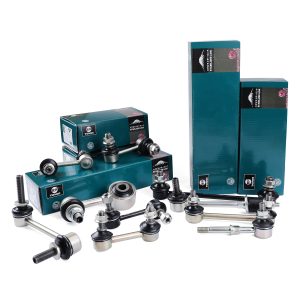
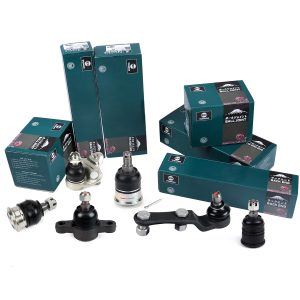
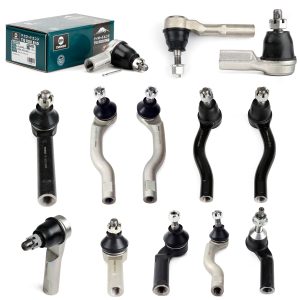
The suspension system is one of the most hardworking systems in any vehicle, especially for Japanese and Korean cars driven in Southeast Asia, the Middle East, and Latin America. Roads in these regions are often uneven, unpaved, dusty, or full of potholes, which places extra stress on critical components like stabilizer links, ball joints, tie rod ends, and inner rack ends. Many car owners wonder: how long do suspension parts actually last before they need replacement? The answer depends on a mix of driving habits, road conditions, climate, material quality, and vehicle usage. In this complete guide, we break down the average lifespan of stabilizer links, ball joints, tie rod ends, and inner rack ends, explain what shortens their life, outline warning signs that replacement is urgent, and help you choose durable parts built for tough regional road conditions.
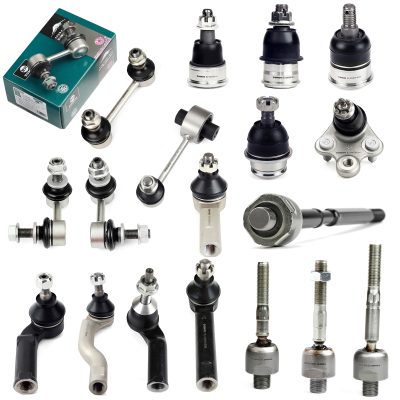
What Are Suspension Parts & Why Do They Matter?
Before diving into lifespan, it’s important to understand the role each component plays. The suspension and steering system keeps your car stable, balanced, and controllable during daily driving, turns, braking, and travel over rough terrain. Stabilizer links connect the sway bar to the suspension, reducing body roll and improving cornering stability. Ball joints act as pivot points between the wheels and suspension, allowing smooth, flexible movement for steering and wheel articulation. Tie rod ends and inner rack ends work together as part of the steering linkage, transmitting steering input from the driver to the front wheels and maintaining proper wheel alignment.
Each part is small but essential. Without fully functional suspension and steering components, your vehicle loses handling precision, tire wear accelerates, and overall driving safety declines dramatically. Unlike engine parts that often show performance drops gradually, worn suspension parts can lead to sudden loss of control, making their lifespan and replacement schedule critical for every driver.
Average Lifespan of Key Suspension & Steering Parts
Suspension parts do not have a fixed expiration date, but automotive repair experts and OEM service guidelines provide clear average ranges for normal driving conditions. Below is the typical lifespan for stabilizer links, ball joints, tie rod ends, and inner rack ends when used on paved roads with moderate driving behavior.
Stabilizer Link Lifespan
Stabilizer links are among the most frequently replaced suspension parts due to their design and position. They endure constant movement, pressure, and impact whenever the vehicle travels over bumps or uneven surfaces. Under normal driving conditions on well-maintained roads, a quality stabilizer link typically lasts between 40,000 and 80,000 kilometers.
However, this range can shift dramatically based on environment. Drivers who frequently travel on unpaved rural roads, construction zones, or heavily potholed urban streets may see stabilizer links wear out as early as 20,000 to 30,000 kilometers. In comparison, highway-focused drivers with smooth road conditions can often reach 80,000 kilometers or slightly more before replacement is needed. The thin connecting rods and rubber bushings on stabilizer links are vulnerable to repeated shock, making them the first suspension part to show wear in many cases.
Ball Joint Lifespan
Ball joints are built with more robust construction compared to stabilizer links, as they support vehicle weight and enable multidirectional movement. A standard ball joint will generally last between 60,000 and 120,000 kilometers under normal driving conditions. Heavy-duty ball joints used in commercial vehicles, pickup trucks, and SUVs may last even longer when maintained properly.
Ball joint lifespan drops significantly in harsh environments. Dust, sand, water intrusion, and lack of lubrication destroy the internal ball and socket mechanism. In desert-like conditions common in parts of the Middle East, fine sand particles can enter the joint if the protective boot is damaged, causing accelerated wear. Similarly, frequent driving through flooded streets or muddy terrain shortens ball joint life considerably. For Toyota, Honda, Nissan, Hyundai, and Kia models used for commercial purposes or heavy loads, replacement often becomes necessary between 50,000 and 70,000 kilometers.
Tie Rod End & Inner Rack End Lifespan
Tie rod ends and inner rack ends are steering linkage components that experience constant turning forces. On average, these parts last between 60,000 and 100,000 kilometers in normal driving scenarios. Outer tie rod ends tend to wear slightly faster than inner rack ends due to their exposed position near the wheels, while inner rack ends are protected inside the steering rack boot but still degrade over time from pressure and friction.
Vehicles used for ride-hailing, delivery services, or city driving with frequent turning and stopping put extra stress on tie rod ends and inner rack ends. In busy Southeast Asian cities with heavy traffic and constant stop-and-go patterns, these parts may wear out at the lower end of the lifespan range. Poor wheel alignment also accelerates wear, creating an uneven load that damages the threads and ball sockets within the steering linkage.
Factors That Drastically Shorten Suspension Parts Lifespan
Many car owners are surprised when their suspension parts fail well before the average kilometer range. Several key factors speed up wear, especially in Southeast Asia, the Middle East, and Latin America. Understanding these factors helps you anticipate replacement and avoid sudden breakdowns.
Rough Road Conditions
Unpaved roads, potholes, speed bumps, and rocky terrain are the biggest enemies of suspension parts. Every impact transfers force directly to stabilizer links, ball joints, and tie rod ends. Repeated shocks weaken metal components, crack bushings, and tear protective boots. In regions where paved roads are inconsistent or rural routes are common, suspension parts wear 30% to 50% faster than under ideal conditions.
Heavy Loads & Towing
Vehicles regularly carrying heavy cargo, multiple passengers, or towing trailers place additional weight on the suspension system. This extra weight increases pressure on ball joints and stabilizer links, bending components slowly over time. Commercial vehicles, family vans, and pickup trucks used for business are particularly at risk.
High Temperatures & Humidity
Hot climates cause rubber bushings and boots to dry, harden, and crack. Once cracked, dust, water, and debris enter joints and links, destroying internal components. Humid coastal areas also lead to corrosion, which weakens metal rods and housing. Corrosion is a major issue in many Southeast Asian and Middle Eastern markets, reducing both strength and lifespan.
Poor Wheel Alignment
Incorrect alignment places uneven stress on tie rod ends, inner rack ends, and ball joints. Misalignment accelerates tire wear and suspension wear simultaneously. Many drivers ignore alignment until tires are damaged, which leads to premature failure of multiple steering and suspension parts.
Lack of Lubrication
Some suspension and steering joints require periodic lubrication. Without grease, friction increases, leading to overheating and internal wear. Sealed maintenance-free parts still degrade over time as internal lubricant breaks down in high temperatures.
Low-Quality Aftermarket Parts
Cheap, low-grade suspension parts may fit but lack durable materials, strong bushings, and corrosion resistance. These parts often fail within 10,000 to 20,000 kilometers, costing more money in frequent replacements. Choosing reliable aftermarket parts designed for Asian vehicles ensures longer service life.
Clear Signs Your Suspension Parts Need Immediate Replacement
Even if you haven’t reached the average kilometer lifespan, certain symptoms mean parts are already worn and unsafe to drive with. Ignoring these signs leads to complete failure and increased accident risk.
Unusual Noises from the Front Suspension
Clunking, rattling, knocking, or squeaking sounds over bumps are the most common early warning. Stabilizer links and ball joints commonly produce these noises when bushings or internal components are loose.
Loose or Vague Steering
If the steering wheel feels sloppy, has extra play, or does not respond immediately, your tie rod ends, inner rack ends, or ball joints are likely worn. This reduces control and increases danger during emergency maneuvers.
Steering Wheel Vibration
Vibration at low, medium, or high speeds often comes from worn ball joints or damaged stabilizer links. The vibration intensifies as wear worsens.
Excessive Body Roll When Turning
A failing stabilizer link causes increased leaning during turns, making the car feel unstable and increasing rollover risk in extreme cases.
Uneven or Abnormal Tire Wear
Inner, outer, or patchy tire wear indicates misalignment or worn suspension parts. Tires become expensive to replace frequently, making early suspension repair cost-effective.
Vehicle Pulling to One Side
Worn tie rod ends, inner rack ends, or ball joints often cause the car to pull left or right even on straight, flat roads. This strains the driver and reduces fuel efficiency.
How High-Quality Aftermarket Parts Extend Suspension Lifespan
For Japanese and Korean cars such as Toyota, Honda, Nissan, Hyundai, and Kia, premium aftermarket suspension parts offer exceptional durability at a lower cost than OEM components. Reputable manufacturers use hardened steel, corrosion-resistant coatings, high-grade rubber or polyurethane bushings, and sealed lubricated joints to withstand harsh regional conditions.
These parts are engineered to match OEM fitment and performance while being built for rough roads, high temperatures, dust, and humidity common in Southeast Asia, the Middle East, and Latin America. Investing in quality parts reduces replacement frequency, lowers long-term repair costs, and maintains consistent handling and safety.
Regular inspection every 10,000 to 20,000 kilometers allows mechanics to detect early wear before complete failure. Pairing suspension replacement with wheel alignment ensures even load distribution and maximizes the lifespan of new components.
Conclusion
Suspension parts like stabilizer links, ball joints, tie rod ends, and inner rack ends are not permanent, but their lifespan can be predicted and extended with proper care and quality parts. Under normal conditions, stabilizer links last 40,000–80,000 km, ball joints 60,000–120,000 km, and tie rod ends & inner rack ends 60,000–100,000 km. Harsh roads, heavy loads, high temperatures, and low-quality parts drastically reduce these ranges.
For drivers across Southeast Asia, the Middle East, and Latin America, choosing durable, well-built suspension components designed for Japanese and Korean vehicles is the best way to ensure safety, stability, and long service life. Don’t wait for complete failure—inspect regularly, replace at the first sign of wear, and prioritize quality to keep your vehicle running smoothly and safely for years.