Introduction: What Are Ball Joints and Why Do They Matter?
When you turn the steering wheel, drive over a speed bump, or navigate a rough dirt road, your vehicle’s suspension system works tirelessly to keep your ride smooth, stable, and safe. At the heart of this complex system are ball joints—small but critical components that act as the main pivots connecting your wheels to the suspension. Often overlooked by casual drivers, ball joints are the unsung heroes of vehicle handling, enabling seamless interaction between the steering mechanism, control arms, and wheel hubs. Without properly functioning ball joints, basic driving tasks like turning, braking, and maintaining straight-line stability become not just uncomfortable, but extremely dangerous.
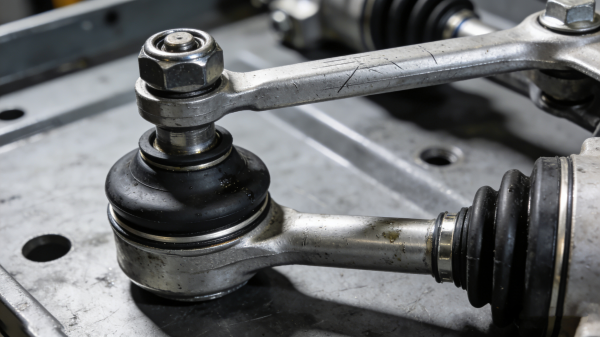 Ball joints function similarly to the human hip joint, featuring a ball-and-socket design that accommodates a wide range of motion. This design allows the wheels to move up and down with the suspension while simultaneously rotating with the steering input, creating a balance between flexibility and structural integrity. Made from high-strength metal alloys and protected by a rubber or polyurethane boot that holds lubricating grease, ball joints are built to withstand constant friction, pressure, heat, and exposure to road debris. However, like all mechanical parts, they are subject to gradual wear and tear, and their degradation can happen slowly over months or even years, making early detection of bad ball joint symptoms essential for every driver.
Understanding bad ball joint symptoms and dangers is not just a matter of vehicle maintenance—it is a critical safety practice that can prevent catastrophic accidents on the road. Whether you drive a compact sedan, a family SUV, a pickup truck, or a commercial vehicle, worn ball joints compromise your ability to control your car, putting you, your passengers, pedestrians, and other motorists at risk. In this comprehensive guide, we will break down everything you need to know about bad ball joints: their core functions, telltale symptoms, life-threatening dangers, common causes of wear, replacement best practices, and how to choose the right parts for Asian-made vehicles like Toyota, Honda, Hyundai, and Kia. By the end, you will be equipped to identify issues early, make informed maintenance decisions, and keep your vehicle operating safely for miles to come.
What Exactly Are Ball Joints? A Deep Dive into Their Design and Function
To fully grasp the importance of ball joints and the risks of failure, it is essential to understand their structural design and operational role in your vehicle’s suspension and steering systems. Most modern vehicles are equipped with either upper ball joints, lower ball joints, or both, depending on the suspension type—MacPherson strut systems typically use only lower ball joints, while double-wishbone suspensions feature both upper and lower components.
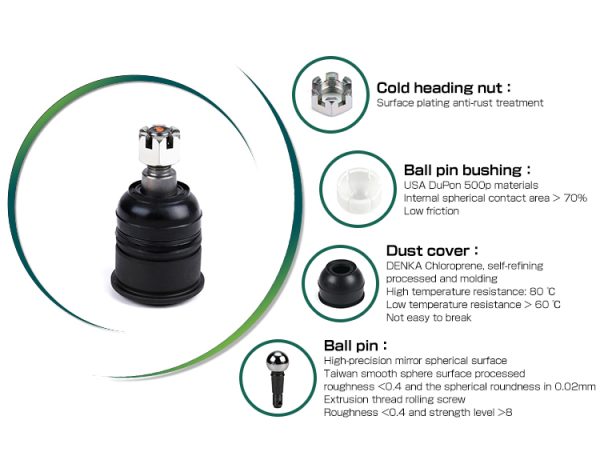
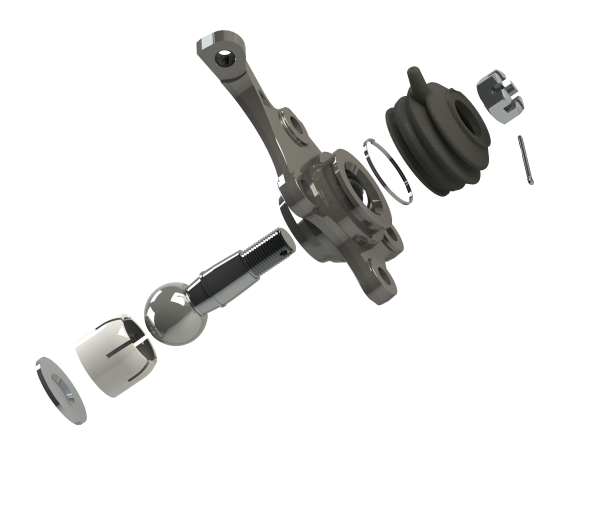
Each ball joint consists of three primary parts: a hardened steel ball stud, a socket housing that encases the ball, and a protective dust boot. The dust boot is a vital protective layer that seals in grease and keeps out dirt, water, salt, and other road contaminants. The internal grease lubricates the ball and socket, reducing friction and preventing premature wear. As you drive, the ball joint pivots continuously, absorbing the shock from uneven road surfaces and translating your steering movements into precise wheel rotation.
This constant articulation means ball joints bear a significant portion of the vehicle’s weight and stress, especially during cornering, braking, and driving over rough terrain. When the ball joint is in good condition, it provides tight, responsive handling with no excess movement. But as the internal components wear down, the tolerance between the ball and socket widens, leading to slack, noise, and instability—the first signs of a failing ball joint.
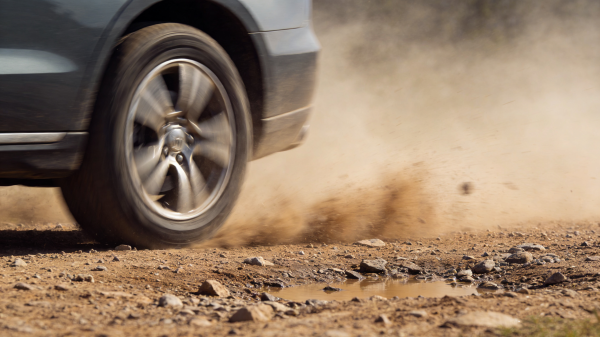
For drivers in Southeast Asia, the Middle East, and Latin America, where rough, unpaved roads, potholes, and harsh driving conditions are commonplace, ball joints endure accelerated wear. These regions’ challenging road surfaces subject suspension parts to constant jolting and impact, shortening the lifespan of ball joints compared to regions with smooth, well-maintained highways. This makes proactive ball joint inspection even more critical for motorists in these areas.
1. Clicking, Popping, or Clunking Sounds When Going Over Bumps
One of the earliest and most noticeable bad ball joint symptoms is unusual noise when driving over bumps, potholes, or uneven pavement. Drivers often report hearing clicking, popping, clunking, or knocking sounds that originate from the front or rear wheel wells. These noises occur because the worn ball joint has excess play between the ball stud and socket. As the wheel moves up and down over a bump, the loose components knock against each other, creating audible vibrations.
Initially, the noise may be faint and only occur on extremely rough roads, but as wear progresses, it will become louder and more frequent—even noticeable on slightly uneven surfaces. The sound is often mistaken for exhaust issues, loose exhaust heat shields, or worn struts, but a certified mechanic can quickly trace it to a failing ball joint. Ignoring this symptom allows the wear to worsen, eventually leading to complete joint separation.
2. Steering Wheel Vibration That Increases With Speed
Steering wheel vibration is another prominent sign of bad ball joints, and it typically intensifies as your vehicle’s speed increases. This vibration stems from the unstable movement of the wheel assembly caused by a loose ball joint. As the ball and socket lose their tight fit, the wheel is no longer held firmly in place, leading to wobbling that transfers directly to the steering wheel.
At low speeds, the vibration may be mild and easy to overlook, but at highway speeds (60 km/h and above), the shaking becomes severe, making it difficult to maintain a smooth, steady drive. This vibration is distinct from wheel imbalance or worn brake rotors—wheel imbalance causes vibration at specific speeds, while ball joint-related vibration worsens progressively as speed increases. Prolonged vibration not only creates an uncomfortable ride but also accelerates wear on other suspension parts, including tie rods, control arms, and wheel bearings.
3. Vehicle Pulling to the Left or Right

If your vehicle consistently drifts or pulls to one side when you release the steering wheel, a worn ball joint could be the culprit. Ball joints play a key role in maintaining wheel alignment, and excessive wear disrupts the factory-set alignment angles (camber, caster, and toe). When one ball joint is more worn than the other, the corresponding wheel sits at an incorrect angle, causing the vehicle to pull toward the side with the faulty part.
This symptom is particularly dangerous on highways, as it requires constant steering correction to stay in your lane, leading to driver fatigue and increased collision risk. Pulling can also be caused by low tire pressure, misaligned wheels, or uneven brake caliper pressure, but if a wheel alignment does not resolve the issue, a worn ball joint is almost certainly to blame. Regular alignment checks can help detect ball joint wear early, as technicians will notice persistent alignment issues that cannot be fixed with standard adjustments.
4. Uneven or Rapid Tire Wear
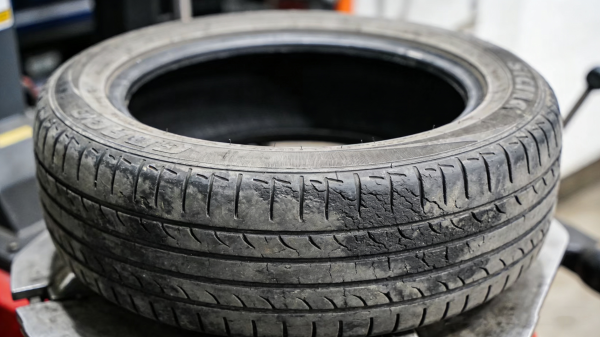
Worn ball joints directly impact tire health, leading to uneven or accelerated tire wear that can render your tires unusable long before their expected lifespan. When ball joints are loose, the wheel tilts inward or outward (negative or positive camber) instead of sitting perpendicular to the road. This misalignment causes the tire to make uneven contact with the pavement, resulting in distinct wear patterns.
Common wear patterns linked to bad ball joints include inner or outer edge wear, cupping, and feathering. Instead of wearing evenly across the tread, the tire will show excessive wear on one side, with bald spots forming quickly. For drivers, this means premature tire replacement, adding unnecessary maintenance costs. More importantly, unevenly worn tires have reduced traction, especially in wet or rainy conditions, increasing the risk of skidding and hydroplaning. If you notice abnormal tire wear, inspect your ball joints immediately alongside your alignment and suspension components.
5. Loose Steering Feel With Extra Play
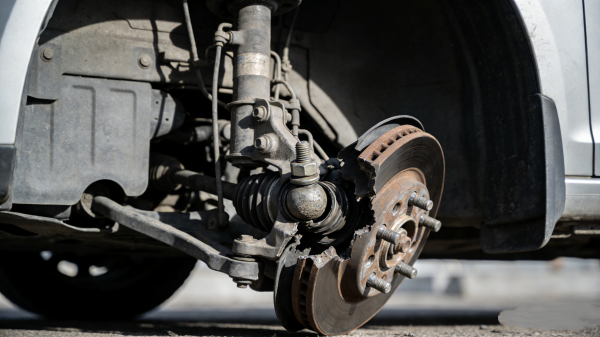
A loose, vague steering feel with noticeable “play” is a classic symptom of advanced ball joint wear. Steering play refers to the amount you can turn the steering wheel before the wheels respond—excess play means you turn the wheel significantly, but the wheels delay their movement. This happens because the worn ball joint cannot efficiently transfer steering input to the wheel assembly, creating a lag in response.
Drivers often describe this feeling as “wandering” steering, where the vehicle does not hold a straight line without constant adjustments. This issue is especially hazardous at high speeds or during emergency maneuvers, as delayed steering response can prevent you from avoiding obstacles or other vehicles. A tight, responsive steering wheel is a sign of healthy suspension and steering components, so any increase in play should be inspected immediately.
The Severe Dangers of Failed Ball Joints: Why Replacement Is Non-Negable
While the symptoms of bad ball joints are inconvenient and costly, the dangers of a completely failed ball joint are life-threatening. Many drivers underestimate the risks of delaying replacement, assuming the part will “last a little longer” or that failure is unlikely. However, ball joint failure can happen suddenly, without warning, and the consequences are often catastrophic.
1. Wheel Separation While Driving
The most terrifying danger of a failed ball joint is complete wheel separation from the vehicle. When the ball stud detaches from the socket, the wheel loses all structural connection to the suspension and frame. This can occur while driving at any speed—from slow neighborhood travel to highway cruising. When the wheel separates, the vehicle drops onto the spindle or control arm, causing an immediate loss of control.
Wheel separation often leads to the vehicle veering off the road, rolling over, or colliding with stationary objects or other vehicles. At high speeds, this type of failure is almost always fatal for the driver and passengers. Even at low speeds, wheel separation causes severe damage to the suspension, frame, body, and tires, resulting in thousands of dollars in repair costs.
2. Total Loss of Steering Control
Ball joints are the critical link between your steering system and the wheels. A failed ball joint severs this link, meaning you can turn the steering wheel fully, but the wheels will not respond. This loss of steering control makes it impossible to navigate turns, avoid hazards, or stay in your lane. In heavy traffic or urban areas, this can lead to rear-end collisions, side swipes, or pedestrian accidents. Even if the wheel does not separate completely, a severely worn ball joint can cause sudden steering lock-up or unpredictable wheel movement, turning a routine drive into a dangerous situation.
3. Increased Risk of Accidents in All Driving Conditions
Worn ball joints compromise vehicle stability in every driving scenario. During cornering, the loose joint causes the vehicle to lean excessively, reducing tire contact with the road and increasing rollover risk—especially for tall SUVs and trucks. In wet, icy, or snowy conditions, the reduced stability and traction lead to longer stopping distances and a higher chance of skidding. Even during straight-line driving, the constant vibration and pulling make it difficult to maintain control, putting every journey at risk.
4. Cascading Damage to Other Vehicle Components
Delaying ball joint replacement does not just risk safety—it also causes secondary damage to expensive suspension and steering parts. The excess movement from a worn ball joint puts extra stress on tie rod ends, control arms, struts, shocks, wheel bearings, and the steering rack. Over time, this stress leads to premature failure of these components, turning a relatively affordable ball joint replacement into a costly full-suspension overhaul. For budget-conscious drivers, addressing ball joint wear early is far more economical than waiting for widespread damage to occur.
5. Overloading and Heavy Vehicle Use
Vehicles used for heavy hauling, towing, or commercial purposes place extra weight on the suspension system, increasing pressure on ball joints. Overloading a vehicle beyond its manufacturer-recommended capacity accelerates wear significantly, as the joint is forced to bear more weight than it was designed for. This is a common issue with pickup trucks and commercial vans used for business purposes.
Ball Joint Replacement for Asian Vehicles: Toyota, Honda, Hyundai, Kia
Toyota, Honda, Hyundai, Kia, and other Asian automakers produce some of the most popular vehicles worldwide, known for their reliability and durability. However, even these dependable cars require high-quality ball joint replacements to maintain performance and safety in harsh regional conditions. Choosing the right ball joints for Asian vehicles is critical to extending service life and avoiding repeat failures.
1. Prioritize Durable, Heat-Resistant Ball Joints
For regions with high temperatures and rough roads, durable, heat-resistant ball joints are a must. OEM (Original Equipment Manufacturer) or premium aftermarket ball joints made from forged steel alloys offer superior strength compared to standard parts. Heat-resistant materials withstand extreme temperatures without breaking down internal lubrication, while reinforced construction handles the stress of rough terrain. These heavy-duty ball joints may cost slightly more upfront, but they last longer, reducing the frequency of replacements and long-term maintenance costs.
2. Choose Ball Joints With Heavy-Duty Dust Boots
Opt for ball joints equipped with thick, durable polyurethane or reinforced rubber dust boots. These boots are more resistant to cracking, tearing, and heat damage than standard rubber boots, ensuring long-term protection against contaminants. A quality dust boot is the single most important feature for extending ball joint life in harsh environments.
3. Follow Manufacturer Replacement Intervals
Asian automakers provide specific maintenance schedules for suspension components. For most Toyota, Honda, Hyundai, and Kia models, ball joint inspection is recommended every 10,000 to 15,000 kilometers, with replacement typically needed between 80,000 and 120,000 kilometers. However, in rough road conditions, inspection should be done every 5,000 kilometers to catch wear early.
4. Always Replace Ball Joints in Pairs
Even if only one ball joint shows signs of wear, it is standard practice to replace left and right joints in pairs. The opposite joint has likely accumulated similar mileage and wear and will fail soon after. Replacing in pairs ensures even handling, balanced alignment, and avoids a second replacement shortly after the first.
5. Trust Certified Mechanics for Installation
Ball joint replacement requires specialized tools and expertise to ensure proper torque, alignment, and seating. Improper installation can lead to premature failure, alignment issues, and safety risks. Always have the replacement done by a certified mechanic familiar with Asian vehicle models, and request a wheel alignment after installation to restore proper handling and prevent uneven tire wear.
How to Proactively Maintain Ball Joints and Extend Their Lifespan
While ball joint replacement is inevitable, proactive maintenance can significantly extend their life and delay costly repairs. Here are actionable tips to keep your ball joints in top condition:
- Inspect dust boots regularly: Check for cracks, tears, or grease leaks during routine oil changes or tire rotations.
- Avoid rough driving habits: Slow down for potholes, speed bumps, and rough roads to reduce impact stress.
- Do not overload your vehicle: Stick to the manufacturer’s weight limits for passengers and cargo.
- Get regular wheel alignments: A proper alignment reduces stress on suspension components, including ball joints.
- Use high-quality lubrication: If your ball joints are serviceable (greasable), follow the recommended lubrication schedule with high-temperature grease.
- Address symptoms immediately: Do not ignore noise, vibration, or loose steering—early intervention is key to avoiding failure.
Conclusion: Don’t Compromise Safety Over Worn Ball Joints
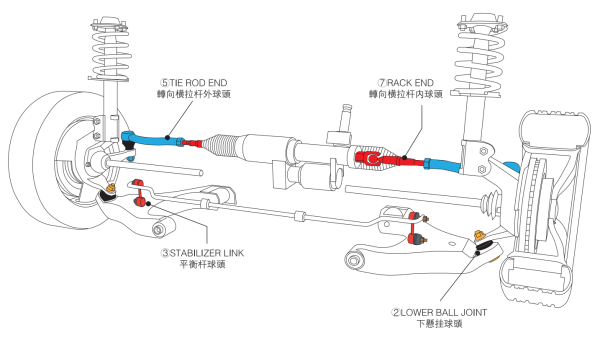
Ball joints may be small components, but their role in vehicle safety and handling cannot be overstated. Bad ball joint symptoms—clicking or clunking noises, steering wheel vibration, vehicle pulling, uneven tire wear, and loose steering—are not minor annoyances; they are urgent warnings that your vehicle’s safety is compromised. The dangers of failed ball joints, including wheel separation and total loss of control, make immediate replacement non-negotiable for every driver.
For those driving in Southeast Asia, the Middle East, Latin America, and other regions with harsh road conditions, being vigilant about ball joint health is even more critical. Choosing durable, heat-resistant ball joints for your Toyota, Honda, Hyundai, Kia, or other Asian vehicle ensures your suspension can withstand the demands of rough terrain and extreme temperatures.
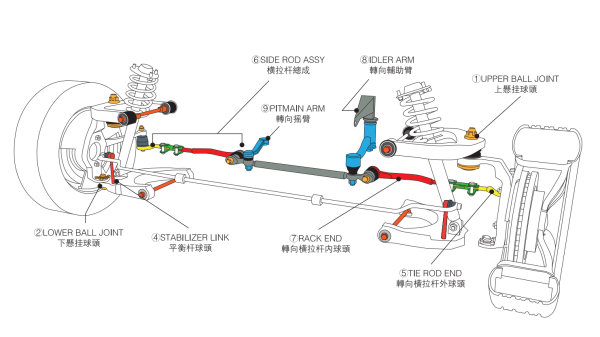
Remember: vehicle maintenance is not just about keeping your car running—it is about protecting lives. If you notice any of the symptoms outlined in this guide, schedule an inspection and replacement with a trusted mechanic as soon as possible. A small investment in ball joint replacement today can save you from life-altering accidents and expensive repairs tomorrow. Safe driving starts with a well-maintained suspension, and healthy ball joints are the foundation of a safe, reliable ride.