
How Long Do Stabilizer Links Last? Full Guide for Japanese & Korean Cars in Rough Road Markets
The stabilizer link—often called a sway bar link, anti-roll bar link, or drop link—is one of the smallest yet most overworked parts in the suspension system. For owners of Toyota, Honda, Nissan, Hyundai, Kia, and other Japanese and Korean vehicles operating across Southeast Asia, the Middle East, and Latin America, stabilizer link failure is one of the most frequent suspension-related complaints. Roads riddled with potholes, unpaved rural tracks, high curbs, and speed bumps place relentless stress on these components, leading many drivers to ask: how long do stabilizer links actually last, and when should they be replaced before they compromise safety?
This complete guide focuses exclusively on stabilizer links, breaking down their average lifespan under real-world driving conditions, the regional factors that accelerate wear, clear warning signs of failure, how to extend their service life, and what to look for when choosing replacement parts for Asian-brand vehicles. Whether you drive a daily commuter car, a family SUV, a taxi, or a light commercial vehicle, understanding stabilizer link health is essential for safe, predictable handling and lower long-term repair costs.
What Are Stabilizer Links & What Do They Do?
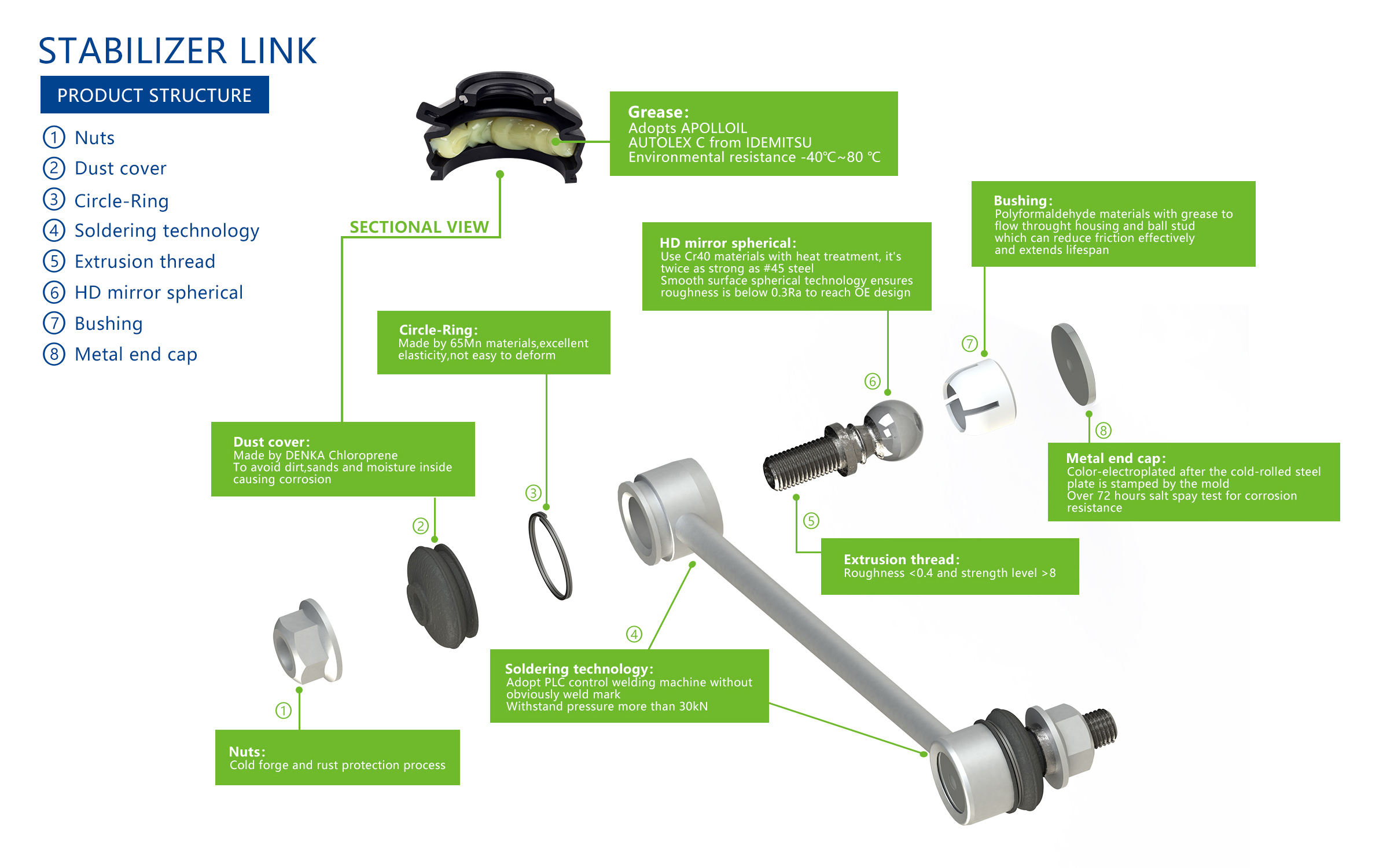
Before examining lifespan and wear patterns, it is critical to understand the core function of stabilizer links within the broader suspension and stability system. The stabilizer bar (sway bar) is a metal torsion bar mounted across the vehicle’s chassis, designed to reduce body roll during cornering, lane changes, and uneven surface travel. Stabilizer links are the connecting rods that attach the ends of the stabilizer bar directly to the suspension strut, knuckle, or control arm.
Their primary roles include:
- Transferring suspension movement between the left and right wheels to minimize body lean
- Improving cornering stability and reducing the risk of rollover, especially in SUVs and minivans
- Maintaining tire contact with the road surface during normal driving and over bumps
- Supporting overall steering precision and preventing vague, unstable handling
On Japanese and Korean cars, stabilizer links are typically engineered with lightweight steel construction, rubber or polyurethane bushings, and small ball-joint style ends to allow flexible articulation. While this design supports efficient performance and fuel economy—key priorities for brands like Toyota and Hyundai—it also makes these parts vulnerable to repeated impact and fatigue, especially in harsh driving environments.
Unlike heavy-duty suspension components built for off-road vehicles, OEM stabilizer links on standard passenger cars are optimized for paved urban and highway use. This is why premature failure is so common in regions where road quality is inconsistent, making lifespan a highly variable metric rather than a fixed number.
Average Lifespan of Stabilizer Links on Japanese & Korean Cars
Automotive service experts, OEM maintenance manuals, and real-world repair data from Asian car workshops across Southeast Asia, the Middle East, and Latin America provide clear lifespan ranges for stabilizer links. These figures reflect both ideal conditions and the harsh realities of regional driving.
Standard Lifespan (Ideal Driving Conditions)
On well-maintained paved roads, with gentle driving habits, minimal pothole impact, and consistent highway use, a genuine OEM or high-quality aftermarket stabilizer link will last:
40,000 – 80,000 kilometers
Drivers who primarily use their vehicles for highway commuting, avoid rough terrain, and practice smooth braking and steering often reach the upper end of this range. Japanese brands like Toyota and Honda are known for durable base component design, allowing their stabilizer links to frequently hit 70,000–80,000 km in favorable conditions. Korean manufacturers Hyundai and Kia follow similar engineering standards, delivering comparable lifespan performance on smooth roads.
Real-World Lifespan (Harsh Regional Roads)
In the high-stress environments typical of many Asian, Middle Eastern, and Latin American markets, stabilizer links wear out at an accelerated rate. For cars driven daily on:
- Pothole-ridden urban streets
- Unpaved rural and village roads
- Construction zones with loose gravel
- Roads with poorly designed, high speed bumps
- Flood-prone or muddy areas
The average lifespan drops sharply to:
20,000 – 40,000 kilometers
In extreme cases—such as taxis and ride-hailing vehicles operating 12–18 hours daily in crowded cities like Bangkok, Jakarta, or Cairo—stabilizer links can fail in as little as 15,000 km. The constant, repetitive impact from uneven surfaces fatigues the metal rods, tears rubber bushings, and loosens the internal ball sockets, turning a long-wearing part into a frequent replacement item.
It is also important to note that stabilizer links rarely fail evenly. Most vehicles experience one side failing slightly earlier than the other, but automotive professionals universally recommend replacing stabilizer links in pairs to maintain balanced handling and prevent rapid re-failure.
Key Factors That Shorten Stabilizer Link Lifespan
Multiple factors contribute to premature stabilizer link wear, with regional road conditions and vehicle usage standing out as the most impactful. For Japanese and Korean car owners, understanding these triggers can help anticipate replacement and avoid unexpected breakdowns.
1. Continuous Impact from Rough Roads & Potholes
Every time a wheel hits a pothole, speed bump, or rock, the force travels directly through the wheel and knuckle to the stabilizer link. Unlike other suspension parts that absorb shock gradually, stabilizer links endure immediate, sharp stress. Over weeks and months, this repeated impact causes metal fatigue, cracking in the rod body, and separation of the bushing from the metal housing. In regions where road maintenance is inconsistent, this factor alone can reduce lifespan by 50% or more.
2. Damaged or Missing Protective Bushings
Stabilizer links rely on rubber or polyurethane bushings to absorb minor vibration and reduce friction. High temperatures—common across the Middle East and tropical Southeast Asia—cause rubber to dry, harden, and crack. Once a bushing cracks or falls out, the link loses its cushioning effect, leading to metal-on-metal contact and rapid wear. Salt, sand, and road debris further accelerate bushing degradation, especially in coastal areas with high humidity.
3. Heavy & Frequent Loading
Japanese and Korean minivans, SUVs, and family sedans are often used to carry multiple passengers, heavy cargo, or roof-mounted luggage. This extra weight increases downward force on the suspension, amplifying the stress placed on stabilizer links during every bump and turn. Commercial-use vehicles, such as delivery vans and taxis, face consistent overload stress, making stabilizer link replacement a routine part of monthly maintenance in some markets.
4. Poor Wheel Alignment & Suspension Imbalance
Incorrect wheel alignment—whether from impact damage or neglected maintenance—creates uneven pressure across the front suspension. A misaligned vehicle places side load on the stabilizer links, rather than allowing them to function in their designed vertical movement. This unnatural stress leads to bending, loosening, and early failure. Many drivers only address alignment after visible tire wear, by which point stabilizer links have already sustained hidden damage.
5. Low-Quality Aftermarket Replacement Parts
One of the most common causes of ultra-short stabilizer link lifespan is the use of cheap, unbranded aftermarket parts. Many low-cost alternatives use thin, low-grade steel, inferior rubber bushings, and poorly sealed ball ends. These parts may fit Japanese and Korean cars but often fail within 10,000–15,000 km, requiring repeat replacement and increasing overall repair expenses. For long-term reliability, investing in OEM-quality or reputable brand aftermarket stabilizer links is essential.
Warning Signs Your Stabilizer Links Need Immediate Replacement
Stabilizer links almost always provide clear warning signals before complete failure. Ignoring these symptoms leads to unstable handling, increased body roll, and potential loss of control during emergency maneuvers. For Japanese and Korean car owners, watch for these common signs:
1. Clunking & Rattling Noises Over Bumps
The most recognizable symptom is a distinct clunking, knocking, or rattling sound when driving over uneven surfaces, speed bumps, or potholes. The noise originates from the loose, worn link moving within its socket or hitting surrounding suspension components. This sound typically worsens over time and becomes more pronounced during turns.
2. Excessive Body Roll When Cornering
A worn stabilizer link cannot properly transfer force between wheels, leading to increased body lean during turns. The vehicle may feel “floaty” or unstable, with the body leaning noticeably to one side. This reduces driver confidence and increases rollover risk, particularly in taller SUVs and minivans from Toyota, Honda, Hyundai, and Kia.
3. Loose or Unstable Steering
While stabilizer links are not direct steering components, worn parts disrupt overall suspension balance. Drivers may notice slightly vague steering response, with the vehicle feeling less precise during lane changes and low-speed maneuvers. This symptom is often mistaken for steering system issues, making professional inspection important.
4. Visible Damage to Bushings or Rods
During routine tire rotation or undercarriage checks, inspect the stabilizer links for obvious damage: cracked, torn, or missing rubber bushings, bent metal rods, corrosion, or loose nut connections. Visual damage confirms immediate replacement is necessary, even if no noise or handling issues are present.
5. Uneven Tire Wear
Severely worn stabilizer links can alter wheel position slightly, leading to uneven or patchy tire wear. While alignment issues are a more common cause of tire wear, combined with noise and body roll, this symptom confirms suspension degradation.
How to Extend Stabilizer Link Lifespan
While complete prevention of wear is impossible in harsh driving conditions, several habits and maintenance steps can significantly extend the life of stabilizer links on Japanese and Korean cars:
- Avoid aggressive impact: Slow down for potholes, speed bumps, and rough terrain to reduce shock load.
- Replace in pairs: Always replace left and right stabilizer links together to maintain balance and prevent uneven wear.
- Use high-quality parts: Choose corrosion-resistant, hardened steel links with durable polyurethane or OEM-grade rubber bushings.
- Maintain wheel alignment: Schedule alignment every 10,000–20,000 km or after any major pothole impact.
- Inspect regularly: Include stabilizer link checks in every routine service to catch early bushing cracking or looseness.
Conclusion
Stabilizer links are the “first line of wear” in the suspension system for Japanese and Korean cars operating in tough regional markets. Under ideal conditions, they deliver 40,000–80,000 km of reliable service, but harsh roads, heavy loads, and high temperatures often reduce this to 20,000–40,000 km. Recognizing early warning signs, using quality replacement parts, and adopting cautious driving habits can extend lifespan and preserve vehicle stability.
For owners of Toyota, Honda, Nissan, Hyundai, and Kia models, stabilizer link maintenance is not just a repair task—it is a safety priority. By staying proactive, drivers can avoid sudden failure, maintain consistent handling, and reduce the cumulative cost of suspension upkeep.
